
A line of verse beside a sweep of colour. A feeling caught twice, once in words and once in paint. That’s illustrated poetry, where language and art meet.
WHERE WORD MEETS COLOUR
Illustrated poetry happens when a poem and a painting begin a conversation. The poet brings rhythm, voice, and tone. The artist replies with colour, texture, and light. Together they create something that goes beyond reading or looking. It becomes a shared way of feeling.
THE MANY WAYS IT CAN LOOK
Part of what makes illustrated poetry so interesting is that there’s no single way of merging a poem with art. All possibilities work.
You might see a poem sitting next to a fine line drawing, where the space around the words gives them room to breathe. Another might have the poem tucked in a corner of a page that’s alive with colour. Sometimes the text sits right across the artwork, as if the words have become part of the brushstrokes.
Some books place the poem on one page and the art on the next, so you move between them, letting one influence how you see the other. A pale watercolour might fill the page, or a single line of ink might hold the mood. It doesn’t matter whether it’s bold or subtle. What matters is that poetry and art share the same conversation.
A LONG CONVERSATION THROUGH TIME
This mix of words and images has existed for centuries. In ancient China and Japan, calligraphers treated writing itself as art. The Japanese haiga tradition paired short poems with brush paintings, each one enhancing the other.
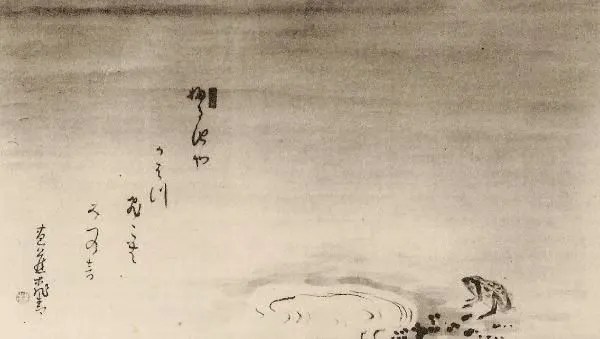
Later, in medieval Europe, monks illustrated manuscripts by candlelight, turning sacred words into glowing art in the margins.
Modern poets and artists have kept the idea alive. Guillaume Apollinaire played with the visual shape of words. E. E. Cummings broke the rules of structure and space. Pablo Neruda’s Odes inspired illustrated versions full of warmth and humanity. More recently, poets like Rupi Kaur have brought the form to a new generation through simple line drawings and short, emotional verse.
Whatever the century, the impulse stays the same. We’ve always wanted to bring together what we see and what we feel.
ILLUSTRATED POETRY TODAY
Today, illustrated poetry appears in many places. You’ll find it in books, online projects, galleries, and more and more on social feeds. Artists and poets collaborate, but there’s also room for those who create both the words and the art themselves.
It’s easy to explore too. Illustrated poetry lives on Instagram and Facebook, and more recently, on creative platforms like Substack, where writers and artists share their work directly with readers.
It’s a form that invites everyone in. You don’t need to know much about art or poetry to enjoy it. You just need curiosity and a bit of time to explore.
That’s what illustrated poetry does best. It shows up, slows us down and prompts us to notice.
INSIDE CREATIVE BUBBLES
That same spirit lives inside Creative Bubbles by The Randoms, a collaboration between poet Natasha Jaclyn and artist Rebecca Blu. Together their works tell stories of love, identity, reflection, and rediscovery.
Pieces like Woman, La Pièce, La Faim, On Happiness, and In Bloom show the range of their work, moving from stillness to strength, from longing to joy. Natasha’s poems reach into the heart of human experience, and Rebecca’s art gives those feelings visible form. Each piece feels like a real conversation that invites you in.
You can explore the collection at creativebubblesbytherandoms.com
ABOUT THE POET
Natasha Jaclyn writes in a way that feels thoughtful and sincere. Her poetry often begins with it a feeling, a thought, a moment, and turns it into something that moves. Her work explores love, belonging, and the beauty of ordinary life.
ABOUT THE ARTIST
Rebecca Blu paints emotion. Her use of light, movement, and colour brings feeling to life. Some of her work feels calm and reflective, while others feel alive with energy and warmth. Every piece encourages the viewer to slow down, to look longer, and to feel something.
A LIVING FORM
Illustrated poetry keeps changing, but its heart stays the same. It connects what we think and what we feel. It helps us see emotion and reminds us that creativity isn’t about knowing, it’s about noticing.
And somewhere
between word and colour
we find a little more
of what it means
to be human.
 Rebecca Art