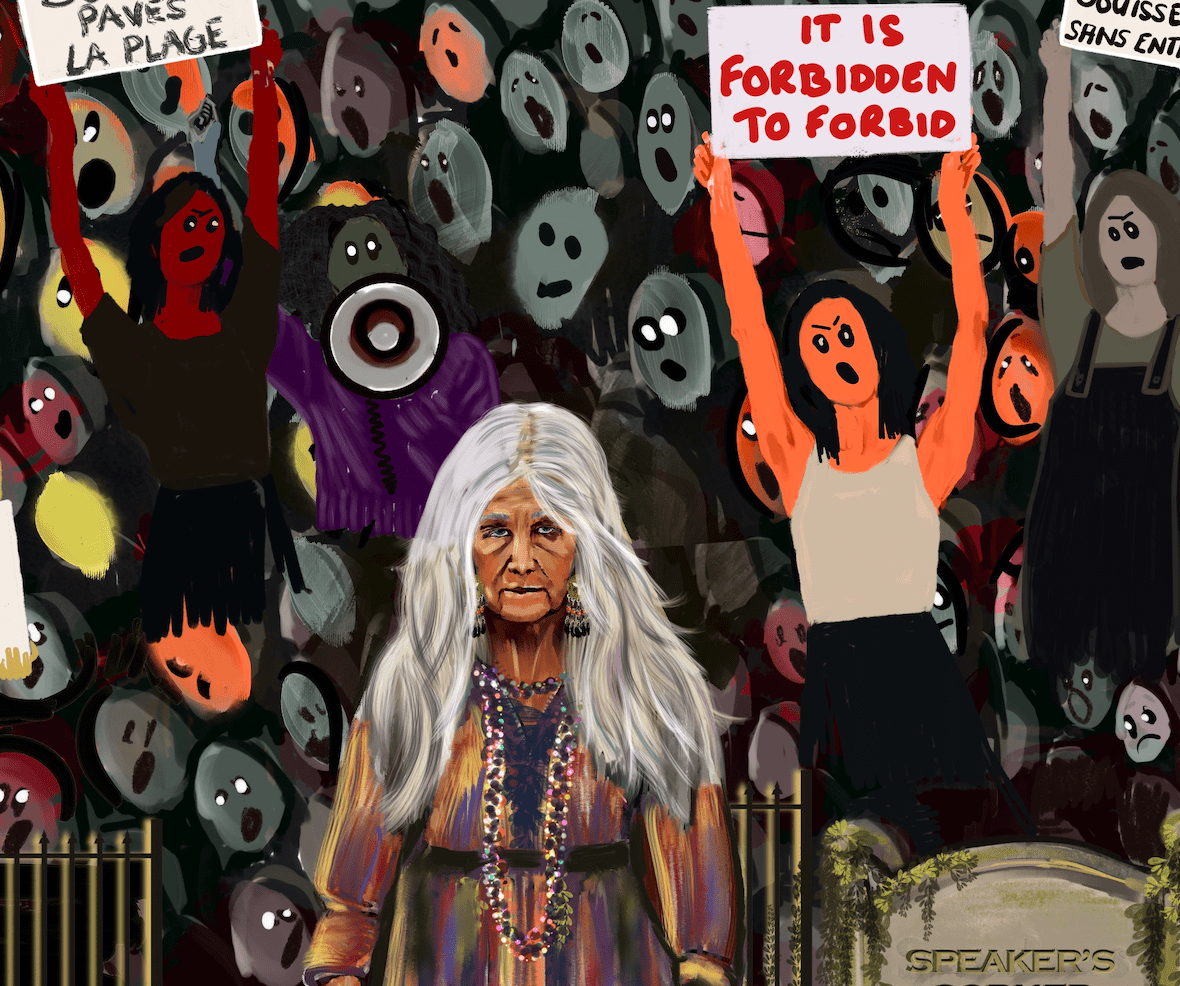
Old Activism and a very short history of why we protest in May
There is something about May. Perhaps it is the blossom, the ballots, the final weeks of term. Or maybe it goes deeper. Perhaps it is memory. Again and again, May calls people to rise. To march, chant, paint, strike, occupy. It is the month protest steps fully into the light.
From the cobbles of Paris to the lawns of Ohio, from Madrid’s plazas to the streets of Minneapolis, May has become a time of collective refusal. A rhythm that pulses across countries and decades.
THE WORLD REMEMBERS
On 1 May, many nations observe Labour Day. It marks the 1886 Haymarket Affair in Chicago, when workers demanding an eight-hour day were met with deadly force. What followed was a wave of international solidarity that still endures.
On 4 May 1919, Chinese students launched what became known as the May Fourth Movement. They protested against colonial interference and sparked a cultural and political awakening that helped reshape modern China.
In May 2011, Spain’s Indignados occupied public squares. Their outcry against austerity and corruption rippled outwards, inspiring Occupy Wall Street and fresh conversations around economic justice.
Then came 25 May 2020. The murder of George Floyd in the United States triggered a global reckoning around race, policing, and power. What followed was not a moment but a movement. Streets filled, walls were painted, statues fell. The outcry had a rhythm, and that rhythm was May.
WHY WE RISE UP IN MAY
May holds a particular energy. The world is thawing, people are emerging from winter’s hold, and suddenly, things feel possible again. Lighter evenings, warmer streets, more time to gather, to move, to speak out. May isn’t polite. It’s not designed to be comfortable. It’s both blossom and barricade.
IN BRITAIN
In Britain, May often brings elections. Local (or general) candidates are out in full force and voters are paying attention. Policies are scrutinised. Budgets spark anger. May becomes a flashpoint.
Students are still on campus, and that matters. From tuition fee protests to solidarity actions, this time of year brings energy, urgency, and numbers. Sit-ins, banner drops, marches. It all comes alive in May.
Then there are the May Day rallies. Especially strong in cities like Manchester, Glasgow, Belfast and London. Often led by trade unions but supported by a patchwork of groups. Anti-war campaigners. Climate justice coalitions. Migrant rights advocates. May is not just a moment in the calendar. In Britain, it feels seasonal. Anticipated. Full of purpose.
IN FRANCE MAY IS SACRED
In May 1968, what began with a handful of students became a national uprising. By the end of May, ten million workers were on strike. Barricades blocked streets. The economy ground to a halt. The government nearly collapsed.
Even now, the slogans of Mai 68 echo through French protests. The paving stones, once prised from the streets to build barricades, are legend. Protesters squeezed lemons to ease the sting of tear gas. The Stone Roses sang about it in Bye Bye Badman with lines that captured that defiant spirit. “I’m throwing stones at you man” and “Choke me smoke the air
In this citrus sucking sunshine”
Each First of May in France remains a theatrical spectacle. Red flags, chants, hand-painted signs. Lilies of the valley sold on corners. Farmers driving tractors into town. Union leaders, anarchists, students and pensioners, all marching together.
Resistance here is not just about policy. It is about principles. And in France, May is when principles rise to the surface.
ACROSS THE POND
Although the United States does not officially recognise May Day as a holiday, activists mark it anyway. On 1 May each year, marches for immigrant rights take over city centres. On university campuses, students hold vigils and walkouts.
One of the darkest moments came on 4 May 1970. National Guardsmen opened fire on students at Kent State University who were protesting against the Vietnam War. Four were killed. The impact was immediate and long-lasting. Public opinion shifted. Student protest surged.
May carries a charge in the American imagination. It is a time to remember. And to resist.
Where there is resistance, there is art
Protest is not only about speeches and slogans. Art and poetry have always been part of the story. They shape how we remember, how we feel, and what we do next.
Art has long stood as a form of resistance, bold in its refusal to stay silent. Picasso’s Guernica still sears itself into our collective memory, a haunting cry against the brutalities of war while Barbara Kruger confronts head-on with her sharp, text-driven collages, dissecting power, gender and consumerism in uncompromising terms. Ai Weiwei turns protest into sculpture and installation, making visible what repressive regimes seek to hide. Faith Ringgold weaves stories of Black American life into quilts and paintings that are vibrant, defiant and full of truth. Even the elusive Banksy leaves his mark on city walls and under bridges using wit and subversion to challenge complacency and spark debate.
In every case, art becomes more than expression; it becomes resistance itself.
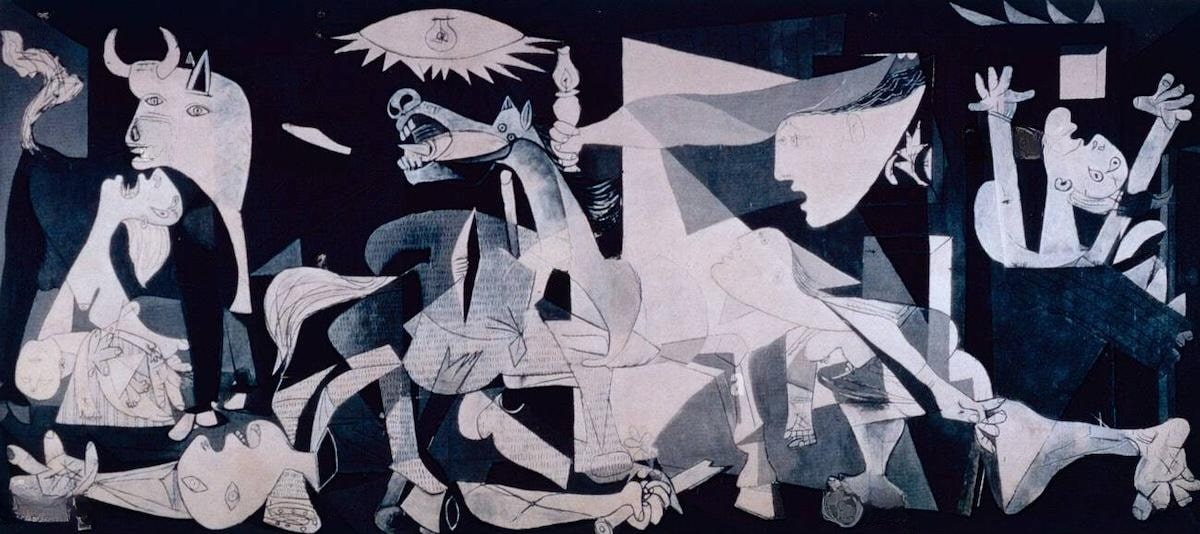
Picasso’s Guernica
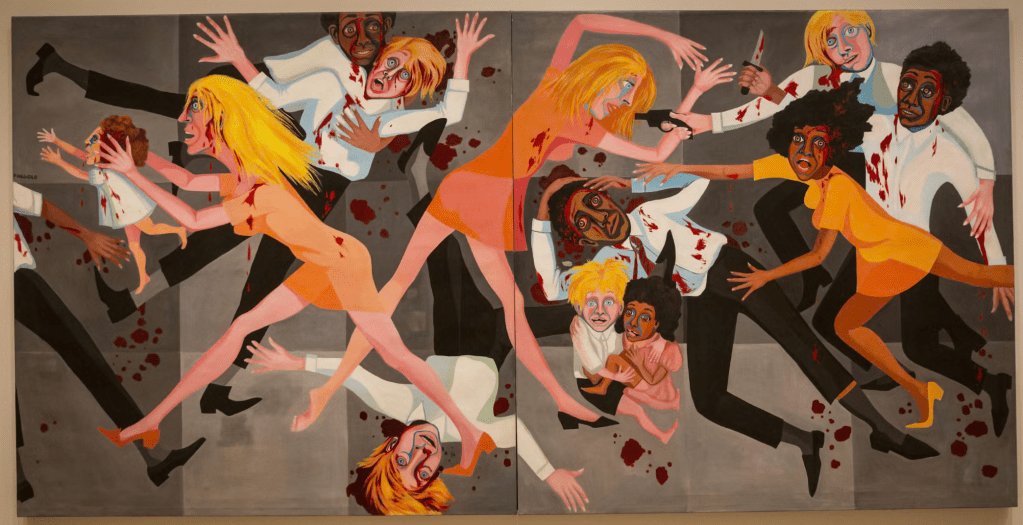
A Moment. A Movement. A Memory
But what about when nothing seems to change? When the marching ends, the signs are packed away, and hope grows heavy? Sometimes we get weary. Disillusioned. The world doesn’t always bend, no matter how long we push.
Families fought for justice after the Hillsborough disaster and were met with decades of denial. Millions protested the Iraq War, but the bombs still fell. The Windrush generation raised their voices long before the scandal made headlines. Some movements bloom slowly. Others seem to vanish. But even when change stalls, the act of resisting still matters. It reminds us who we are.
If this speaks to you, pop over to Creative Bubbles and discover Old Activism, a poem and illustration exploring when the spark feels dim. You’ll also find other works in our debut collection across themes like Loss & Letting Go, Identity & Self-Discovery, Love & Relationships, and Nature & the Inner World.
“She grew ashamed of difference,
And tired of the heights,
The soapbox of sighs and stillness.”

 Rebecca Art