
How to Mastering Charcoal and Pencil Techniques to Capture Their Unique Beauty
There’s something captivating about drawing a panda. The stark contrast of their black and white fur makes for a rewarding challenge in pencil and charcoal. Their round forms, soft expressions, and expressive eyes mean that as a subject they are both simple in shape yet rich in depth. Illustrating pandas effectively, however, requires careful attention to shading, texture, and emotion. In this blog post, I’ll share some essential tips for bringing pandas to life in monochrome, recommending some high-quality charcoal supplies from Fred Aldous (UK), and exploring why we are so psychologically drawn to these gentle giants.
How to Draw a Panda in Charcoal
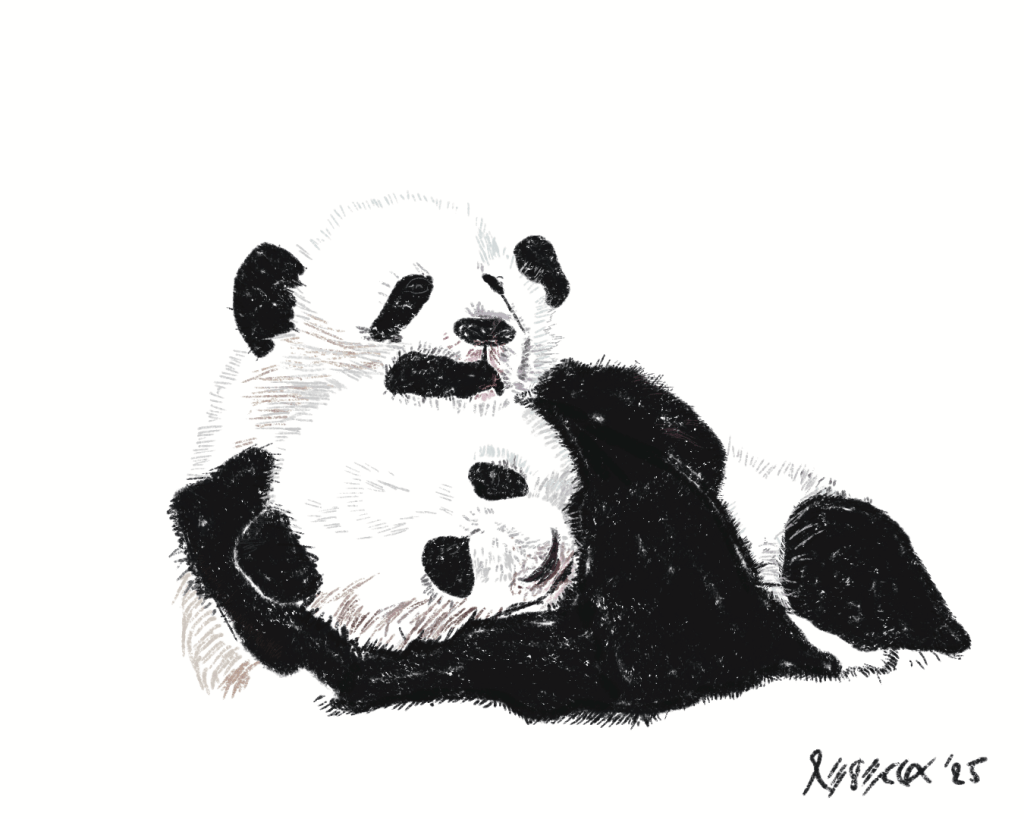
Pandas, with their distinct black and white markings, are a study in contrast. This makes them an ideal subject for charcoal and graphite, which thrive on tonal variation and dramatic light play. When illustrating pandas, here are a few pointers to keep in mind:
Mastering the Fur Texture
Panda fur is thick and slightly coarse, but not overly textured like a tiger’s or wolf’s coat. To create this effect:
- Use soft, circular strokes with a graphite pencil (2B or 4B) for the white fur, allowing for subtle variations in tone.
- For the black patches, apply layered charcoal gradually rather than pressing too hard at once. This prevents the fur from looking flat.
- Use a kneaded eraser to lift highlights in the fur, creating depth and realism.
Achieving the Right Tonal Balance
The key challenge is ensuring that the dark markings don’t overpower the lighter areas.
- Use charcoal pencils for the darker areas (eyes, ears, patches) but build up the tone with layering.
- Avoid making the black patches a single flat tone—introduce light reflections to add realism.
- Blend with a tortillon (blending stump) to achieve soft gradients.
Capturing Expression
Pandas have a soft, almost melancholic expression, which is key to their appeal. To convey this:
- Focus on the eyes using a white gel pen or eraser for highlights.
- Ensure the mouth is subtly defined—pandas don’t have exaggerated smiles, so a gentle curve can add charm.
- Work on the snout shading carefully. Too much darkness around the nose can make the face look muddy.
Best Charcoal Supplies for Drawing Pandas
If you’re looking for quality charcoal and pencils in the UK, Fred Aldous is an excellent place to shop. Here are a few recommendations:
- Derwent Charcoal Pencils – A great set for precision and control.
- Winsor & Newton Willow Charcoal – Ideal for deep blacks and broad strokes.
- Faber-Castell Pitt Charcoal Pencils – High pigment and smooth application.
- Daler-Rowney Medium Charcoal Blocks – Useful for covering large areas.
- Blending Stumps & Kneaded Erasers – Essential for smooth transitions and lifting highlights.
Fred Aldous Shop Address: 37 Lever Street, Stevenson Square, Manchester, M1 1LW, UK
Website: https://www.fredaldous.co.uk
The Story of Pandas: Origin and Personality
Giant pandas (Ailuropoda melanoleuca) originate from the mountainous regions of China, primarily in Sichuan, Shaanxi, and Gansu. These remarkable bears have roamed the Earth for millions of years, with fossils dating back at least two million years.
Despite their bear-like build, pandas are solitary and peaceful creatures, spending most of their time eating bamboo (which makes up 99% of their diet). While they can be playful, especially as cubs, adult pandas are known for their calm, unhurried demeanour, moving with a deliberate slowness that adds to their charm.
Why Are Humans So Drawn to Pandas?
There’s something almost magical about pandas, and their appeal goes beyond their distinctive black-and-white fur. Psychologists suggest a few reasons why we find them so endearing:
Neoteny: The Power of Baby-Like Features
Pandas exhibit neotenous (infant-like) features—large eyes relative to their face, round heads, and chubby bodies. These are traits that humans instinctively associate with cuteness and vulnerability, triggering a nurturing response.
Gentle Demeanour
Unlike other bears, pandas do not exhibit aggressive posturing. Instead, they have slow movements and playful interactions, which make them appear approachable and non-threatening.
Contrast of Strength and Softness
Despite their size and strength, pandas have a soft, clumsy nature. This paradox makes them fascinating—they are wild animals, yet they seem so gentle and even comical at times.
Rarity and Conservation Efforts
Pandas have been a symbol of conservation for decades. Their rarity (once critically endangered) adds an element of exclusivity to their charm, and many people feel emotionally invested in their survival.
Final Thoughts: An Artist’s Perspective
Illustrating pandas is an exercise in contrast, softness, and expression. Whether you’re sketching in pencil or crafting deep shadows in charcoal, their distinctive features provide an excellent study in light and form. But beyond the artistic challenge, pandas remind us of the delicate balance between strength and vulnerability, something that resonates deeply with us as humans.
So, next time you pick up a charcoal stick and start sketching a panda, consider not just its physical form but also its essence – the calm, the curiosity, and the quiet resilience that has made this species one of the most beloved in the world.
If you’re keen to try your hand at panda illustrations, grab some quality charcoal from Fred Aldous, find some reference images, and enjoy the process of bringing these remarkable creatures to life on paper.

 Rebecca Art