Loose Watercolour Landscapes: A Playful Technique to Explore
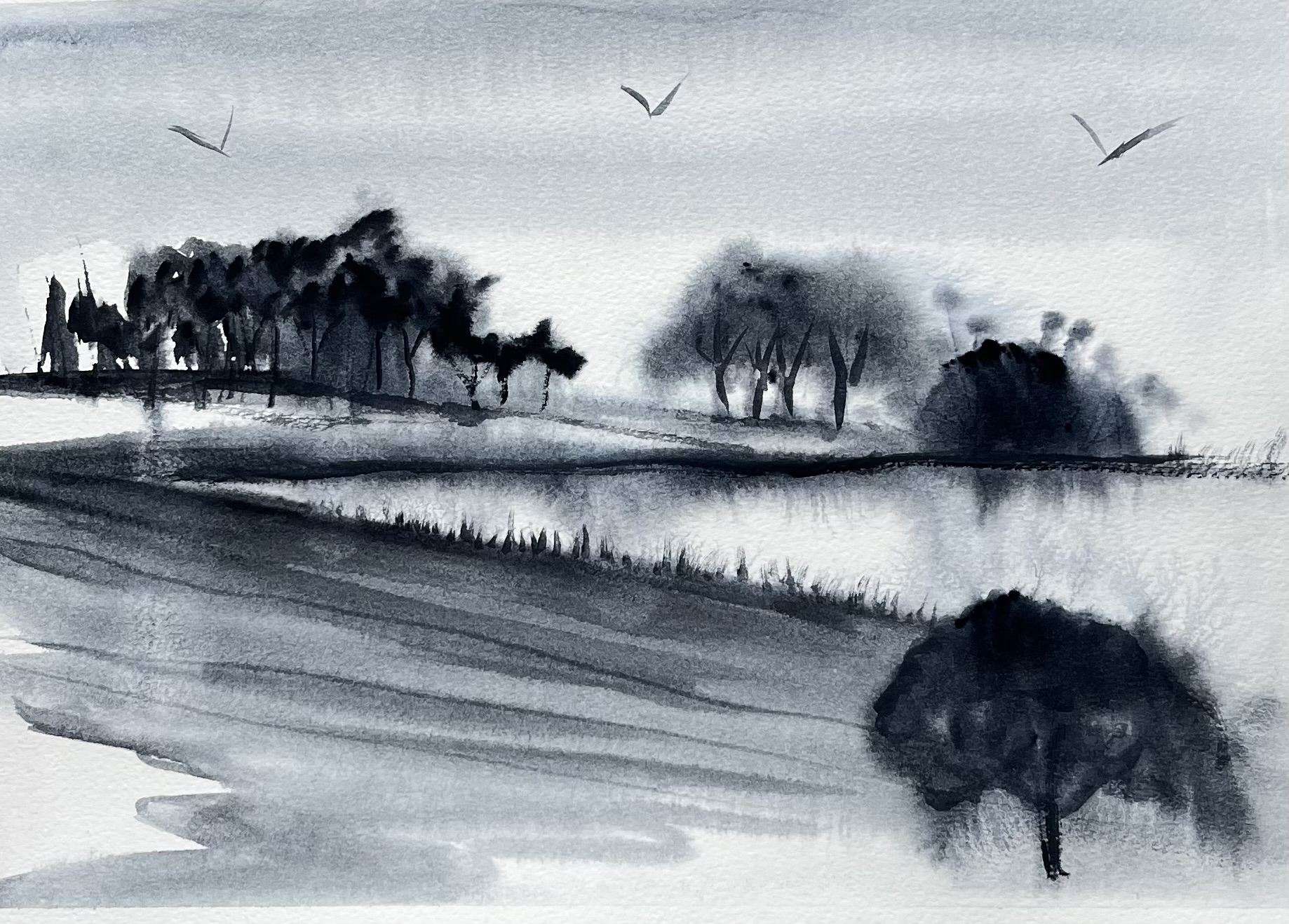
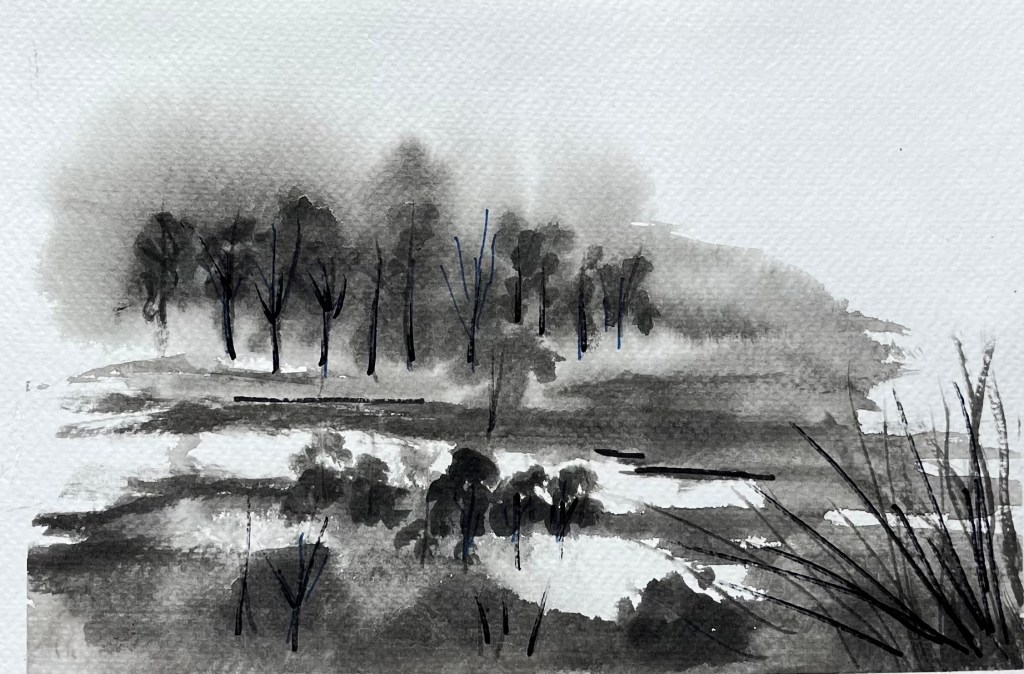
If you’re drawn to the unpredictable beauty of watercolour, loose landscapes are a wonderful way to immerse yourself in this medium. You don’t have to aim for perfect details or rigid lines—this style is all about capturing mood and atmosphere while letting water and pigment do the hard work.
This approach is ideal for anyone who loves trying new techniques. My go-to for this method is 300 GSM watercolour paper—it’s sturdy enough to handle the saturation—and I often use just one colour: Payne’s Grey. Its versatility is unmatched, shifting from soft silvers to deep charcoals to create atmospheric landscapes with ease.
At the time of writing, a 60ml tube of Payne’s Grey is available for £6.50 here:
Saturate Your Paper
The foundation of a loose watercolour landscape is a wet canvas. Start by soaking your paper with a sponge or a large brush. You want a glistening surface without pools of water, creating a perfect base for the paint to flow and blend naturally. This step is almost meditative—it sets the tone for the entire painting.
Using Payne’s Grey for this stage is incredibly satisfying. Its moody tones spread beautifully, softening as they move across the paper, creating subtle gradients and washes that lay the groundwork for your landscape.
Add Rough Horizons
With your paper ready, take a flat brush and sweep rough horizontal strokes of Payne’s Grey across the damp surface. These strokes form the foundation of your scene: a distant horizon, rolling hills, or perhaps the gentle suggestion of a lake. You don’t have to worry about precision—let the water blur and soften the edges. That hazy, atmospheric effect is what gives this technique its charm.
Refine and Build Depth
As the paper starts to dry slightly, you can add more detail. Use a smaller brush to introduce deeper tones and create soft shapes that hint at trees, shadows, or other features. Payne’s Grey is perfect for this—it allows you to build contrast and depth without overwhelming the softness of the piece. Focus on layering and texture rather than crisp, defined shapes; the goal is to evoke rather than depict.
Tilt for Texture
This is where the magic happens. While the paint is still wet, gently tilt the paper in different directions. Watch as the paint flows, creating organic patterns that suggest ripples in water, textured ground, or even distant hills. Payne’s Grey works wonderfully for this, as its granulating qualities add depth and interest to the flowing shapes.
If you want softer transitions, let the paint settle naturally; for sharper edges or highlights, use a tissue or a dry brush to guide the movement.
Bring in the Final Touches
Once your painting is fully dry, add those little touches that bring the scene to life. Use a dry brush to create blades of grass, rocks, or ripples in the foreground. With Payne’s Grey, you can adjust the intensity easily—lighter washes for distant elements, darker strokes for details that pop. The beauty of this step is in its subtlety; you don’t need to overdo it.
Why You’ll Love This Process
What makes this technique so enjoyable is how simple and freeing it feels. You don’t have to plan every step; instead, you let the water and pigment take the lead. Using a single colour like Payne’s Grey keeps things cohesive and allows you to focus on tone, texture, and atmosphere.
Plus, every painting is unique. Even if you follow the same steps, the way the water flows will always surprise you, making each piece a little adventure. Whether you’re new to watercolour or a seasoned dabbler, this technique invites you to slow down, embrace imperfection, and enjoy the magic of creating.
So, grab your 300 GSM paper, a tube of Payne’s Grey (maybe from the link above), and see where this playful process takes you. It’s a wonderful way to explore your creativity and let your imagination wander.
 Rebecca Art